COC 可可狼姬 Generation 2 and Pro Comparison
COC 可可狼姬 Generation 2 and Pro Comparison
Images were selected by position and quality; individual human review is pending.
This text passed automated basic checks only; it has not undergone model or human review.
Versions and condition on opening
Generation 2 is the smaller moulded model; Pro increases bulk and adds more upper-leg contours. Both revise the channels, not merely the packaging. Generation 1 is only a structural reference. Detailed dimensions, weights and material comparisons appear in source images without written transcription, so numerical specifications or ratings cannot be reconstructed from the text.
Generation 2 comes bagged with an uncovered plastic tray, scented insert and thin postcard. Considerable oil had accumulated inside the bag, requiring cleaning after unpacking. The insert smelled like fruity fragrance rather than chocolate and was not particularly strong. Pro adds a tray lid and glued divider, but its outward-turned tray edges scrape the box during opening and should not be forced. Less oil was in Pro’s bag, though the surface still showed dirt. Front packaging improved, but Pro’s side background had obvious jagged printing; finishing did not improve uniformly.
Body, balance and surface
Generation 2 is yellow-brown and relatively smooth, with a mild elastomer smell. A flat waist, rounded upper-leg contours, slight abdominal fullness and oval rear give natural proportions without an excessively narrowed waist. Material is medium-firm with distinct rebound. The sample had pressure marks, embedded impurities and entrance-edge defects. Its forward centre of gravity makes upright placement prone to tipping forward. Resting on the abdomen and rounded leg contours is steadier, although some positions still require support.
Pro adds a coarser skin texture and a slightly stronger, still modest odour. Its fuller shape has leg contours further back. Adhesion and moulding defects occur in the leg creases; forceful repeated rubbing may affect the surface. Rearward balance supports sitting more easily but can make horizontal placement tip backward. Entrance colouring resembles Generation 1’s process. The earlier sample faded after washing; that is not a confirmed result for this Pro sample.
Oil and space measurements
Both left visible oil marks in an 8-hour flat-surface test. Manual air-displacement records used a 30ml starting level: Generation 2 front 48−30=18ml, rear 38−30=8ml; Pro front 41−30=11ml, rear 48−30=18ml. These illustrate sample space differences, not certified capacities.
Generation 2 channels
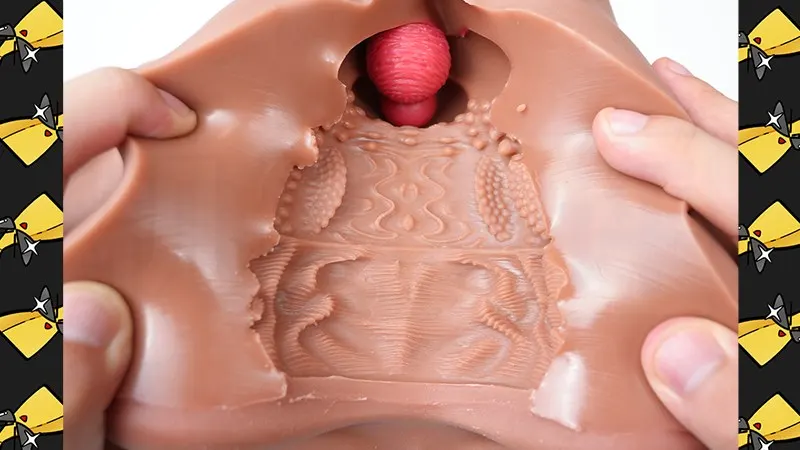
The front has three sections: symmetrical elongated curved folds, thin straight longitudinal ribs, and a terminal double-ball cavity. The first section has limited sideways undulation and remains predominantly longitudinal. Three resilient thin ribs dominate the middle, overshadowing small granules and background texture. Concentrated friction makes lubrication particularly important; distinct variation does not automatically mean equal comfort.
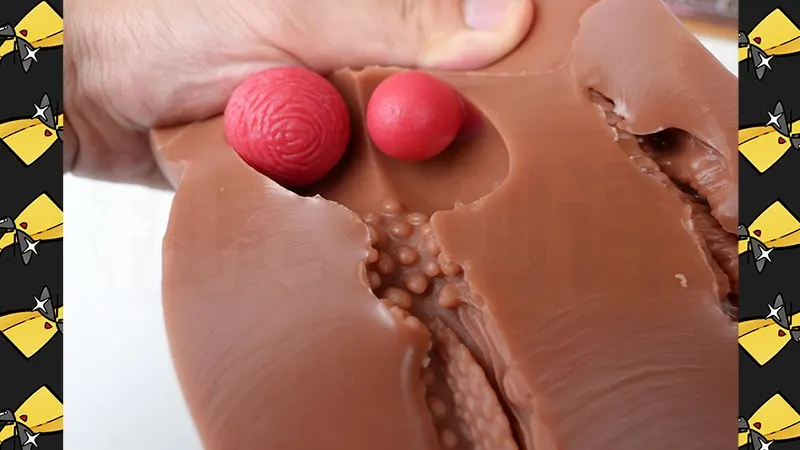
The terminal balls differ in size: one is textured, the other smooth. The rear channel combines differently sized projections, ribs and long spiral ribs at the end, without an abrupt central division. It is gentler and more continuous than the front. The sample also had channel misalignment, bringing parts close to the exterior and leaving thin terminal walls. Moulding position and wall thickness create durability concerns separate from the intended design.
Pro channels and handling
The front also has three sections: large projections, transverse texture with rings, and a terminal cavity. Two large front projections work with smaller granules; a thick middle ring, thick walls and narrow channel create clear pressure. This revises Generation 1 rather than retaining Generation 2’s aggressive thin ribs. Numerous elements do not always have a clear hierarchy, and the difficult-to-clean ball cavity remains.
The rear lays folds and varied projections continuously over a curved path, reducing segmentation. Continuity is better, but it still resembles common front-channel moulds, so the two channels have limited thematic distinction.
Pro’s bulk, rearward balance and entrance angle combine to complicate handling. Horizontal placement tends to tip back, and leg/rear contours restrict access to the entrance. Channel orientation is roughly level with the waist and abdomen rather than easily matching common body angles, requiring repeated adjustment. Smaller Generation 2 is easier to reposition, with a lower handling burden.
Cleaning limitations
Generation 2’s balls form narrow gaps near the walls. Tools tend to remain between them rather than reaching the edges, and absorbing moisture is awkward. The thick body lacks the working space of an easily inverted handheld model. Pro lengthens the channel while retaining ball-cavity gaps, adding grooves and complex deep terminal areas in the rear channel. Both cleaning and drying are demanding.
The segmented ribs, double balls and Pro’s continuous rear channel offer distinct ideas, but concentrated friction, misalignment and thin walls, balance, angles and deep cleaning difficulties remain central limitations. Scores appear only in an image; neither the title nor written review supplies numerical or star ratings. No long-term durability conclusions are established.
Source and editorial note
This article is an edited translation of the linked original review, not a new hands-on test by voalice. Scores describe the original reviewer’s observations. Product names may retain their original spelling; translated names are descriptive, not verified official names.
Commercial links lead to iSexy Shop and KimochiLife. Availability is not verified here.
Editorial policy